
This clinical case presents the management of a periprosthetic femoral fracture occurring shortly after hemiarthroplasty in a 68-year-old patient. Based on the initial clinical presentation and imaging findings, how would you approach fracture assessment in this situation?

- 68 year-old female
- Walks with a walker because of a hydrocephaly treated 20 years ago
- Left bipolar hemiarthrosplasty implanted 2 weeks ago for a Garden 4 neck fracture
- Fall while walking
Imagery
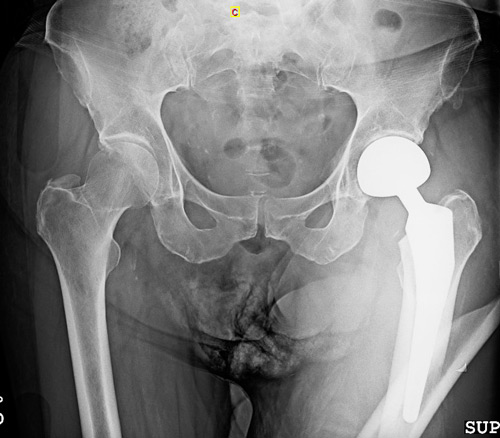
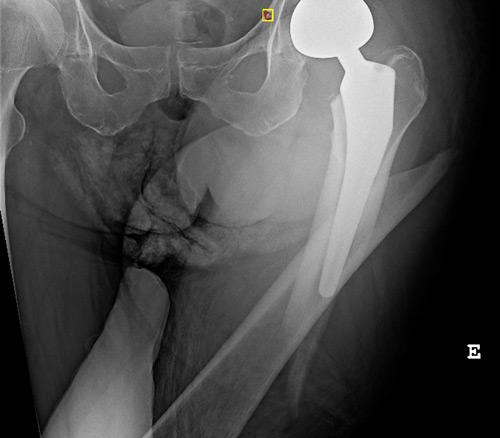
Previous X-rays
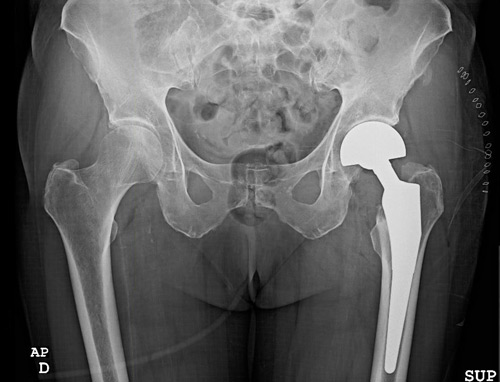
What classification allows us to classify this fracture and what is its grade?
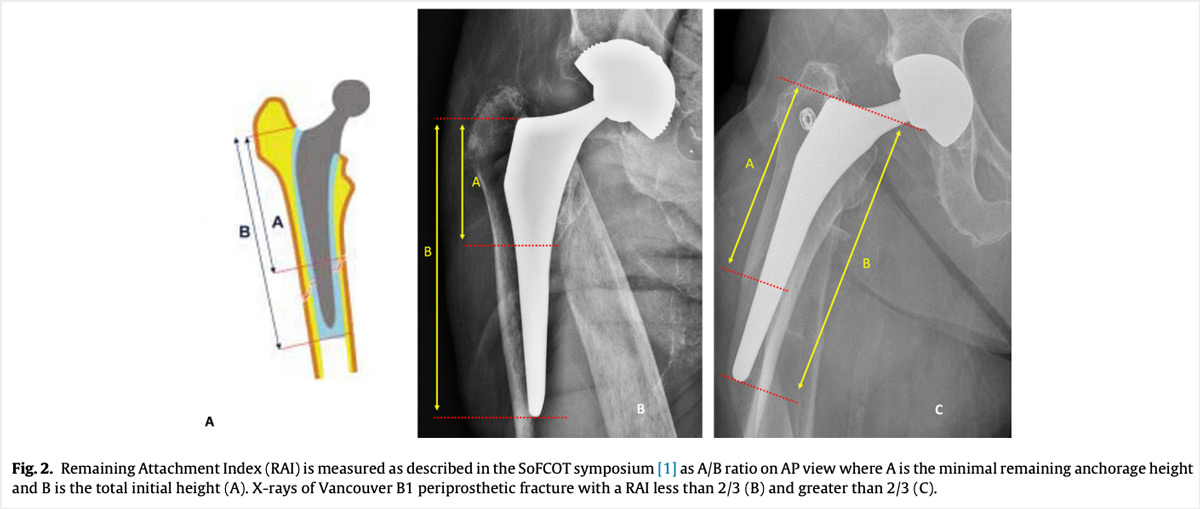
- ✔️Vancouver classification grade B1
The French Society of Orthopedic Surgery and Traumatology (SoFCOT) recommended a specific Remaining Attachment Index (RAI) to asses residual fixation. Remaining Attachment Index < 2/3 in Vancouver B1 periprosthetic hip fracture is a risk factor for early implant loosening after isolated internal fixation
What could have been done to reduce the risk of this type of complication?
- ✔️Cemented stem
- ✔️Collared stem
How would you manage this condition?
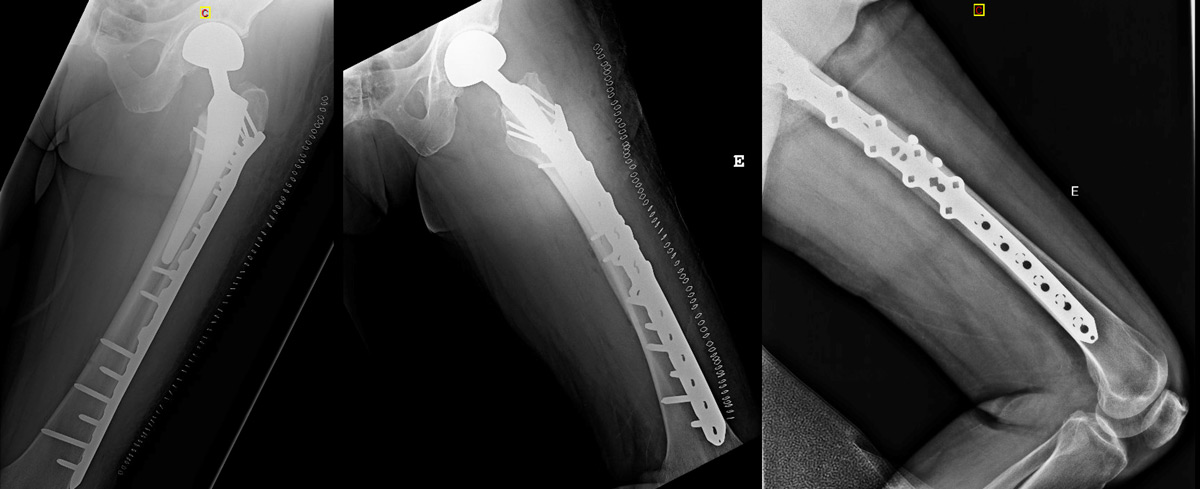
- ✔️Femoral ORIF with a plate alone
Mondanelli N, Troiano E, Facchini A, Ghezzi R, Di Meglio M, Nuvoli N, Peri G, Aiuto P, Colasanti GB, Giannotti S. Treatment Algorithm of Periprosthetic Femoral Fracturens. Geriatr Orthop Surg Rehabil. 2022 May 10;13:21514593221097608. doi: 10.1177/21514593221097608. PMID: 35573905; PMCID: PMC9096211.
- In this case, we decided to perform a simple ORIF with a plate (Depuy Synthes) due to the Vancouver B1 type of fracture and Remaining Attachment Index > 2/3
- A full weight bearing was allowed because of her condition.
- At 6 weeks post-op she was able to walk with her walker again
Postoperative imagery
Comments
(No subject)
great job(No subject)
Nice case! Did you put any cerclage wire around the stem ?