
Patellar instability after total knee replacement is often approached as an isolated patellofemoral problem. However, this Live Clinic case discussion highlights why surgeons should assess the entire knee before considering treatment options.
Read more: patient history, clinical examination and treatment suggestion
Start with the patient history
In this case, the patient reported persistent symptoms since the index procedure, with progressive worsening over time. The sensation of lateral patellar movement, recurrent swelling and instability while walking were key complaints. A detailed history remains essential when evaluating patella problems after knee replacement, particularly when symptoms have been present for years.
Dynamic clinical examination matters
Rather than focusing solely on imaging, Ran Schwarzkopf emphasised observing gait, stair negotiation and limb alignment. Clinical examination revealed valgus collapse, ligamentous laxity and functional instability during weight bearing. Patellar subluxation was identified, but the broader mechanical instability appeared to be the underlying issue.
Revision or soft tissue procedure?
Although soft tissue repair had been proposed previously, the expert panel questioned its value in a chronic setting. The discussion favored full revision TKA with restoration of balanced flexion and extension gaps, combined with an appropriate level of implant constraint. A rotating hinge should remain available when severe ligament insufficiency or recurvatum is encountered intra-operatively.
Key learning points
- Assess the entire limb, not only patellar tracking.
- Observe gait and stair function whenever possible.
- Chronic patellar instability may indicate global knee instability.
- Soft tissue reconstruction alone may not address underlying mechanical failure.
- Revision strategies should remain adaptable according to intra-operative find-ings.
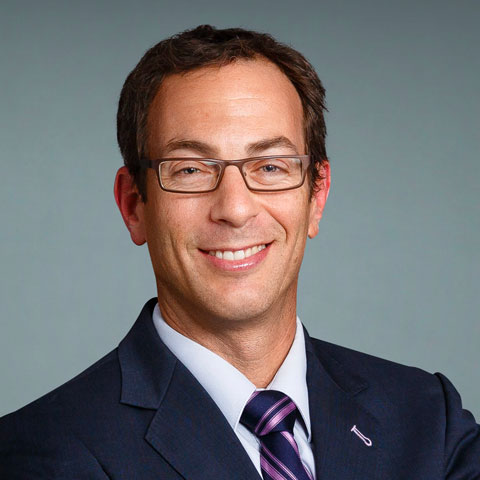
"I graduated summa cum laude from both my Bachelor of Science degree and master’s degree in biomedical engineering programs at Ben-Gurion University of the Negev in Israel, where I later graduated as valedictorian of my medical class.
After an orthopedic surgery residency here at the Hospital for Joint Diseases—now NYU Langone Orthopedic Hospital—I completed a fellowship in adult reconstruction and total joint replacement surgery at Brigham and Women’s Hospital, a major teaching hospital of Harvard Medical School.
My practice at NYU Langone focuses specifically on caring for people with hip and knee conditions. I have a particular interest in degenerative joint disease of the hips and knees. Other areas of focus include treatment for people with developmental hip dysplasia, avascular necrosis, posttraumatic arthritis, rheumatoid arthritis, and complex revision surgery.
I have had the privilege to train and learn from the founders of the field of joint replacement surgery. I have gained a vast amount of experience in performing complex and revision hip and knee surgery, partial knee replacement, ligament-sparing knee surgery, hip resurfacing, and hip fracture surgery. I helped develop and use robotics and advanced technology for hip and knee replacement. I pioneered minimally invasive surgical techniques such as the STAR approach for hip and robotic knee replacements. My goal is to help my patients maintain their lifestyle and activity levels.
Dr Schwarzkopf is the director of the Research Center for the Adult Reconstruction Division. Dr. Schwarzkopf’s research interests include both clinical and basic science. He has published over 800 peer reviewed studies on topics ranging from hip fracture fixation to outcomes of total joint replacements. Dr. Schwarzkopf has received multiple grants throughout his career including the TriOrg, FARE, OREF and knee and hip society research grants. Dr. Schwarzkopf is a member of both the prestigious North American Hip Society and Knee Society; he serves on the board of the hip society and the American Association of Hip and Knee Surgeons."
Dr Schwarzkopf is married to Aude, and father to Matan, Yaelle and Mia. His hobbies include running, snowboarding, Scuba diving and skydiving.
You must be logged in or create an account to see all the content
I have my account
Not registered yet? Create your account and get free access to:
- Access slide presentations from PCO Course
- Watch session videos and cases
- Discuss cases with your peers
- Register for and view PCO Webinars
- Read a selection of articles
- And more…